

U.S. DOT Hosts 2026 SMART Stage 1 Grantee Summit
Summit Overview
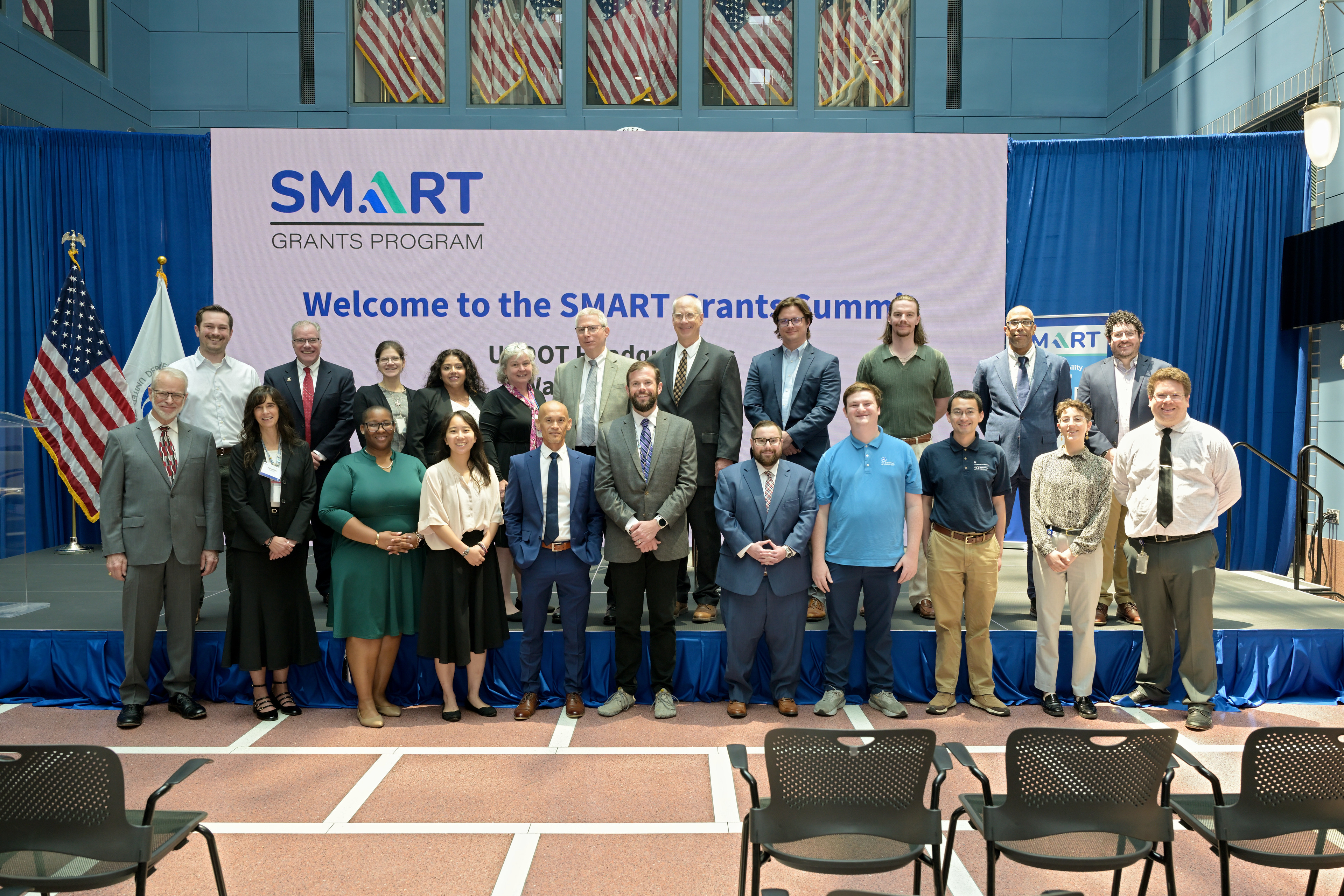
On July 15, 2026, the U.S. Department of Transportation held its 4th annual Stage 1 Grantee Summit for the Strengthening Mobility and Revolutionizing Transportation (SMART) Grants program. The Summit was held at U.S. DOT Headquarters in Washington, D.C., with nearly 200 participants.
Over 100 representatives from 55 innovative SMART grants from 33 states participated in the Summit, including lead applicants and their project partners.
Office Hours
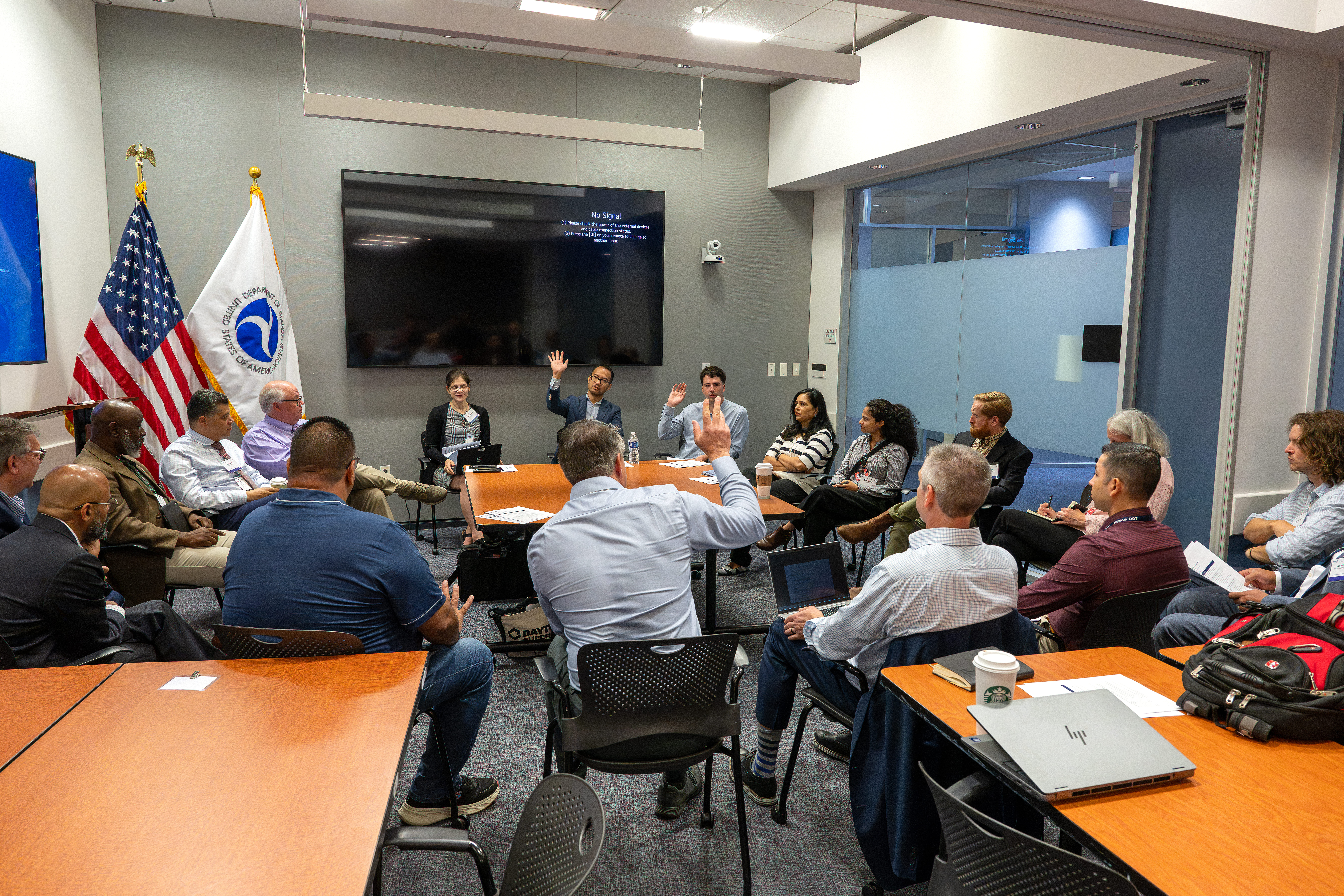
The Summit began with an office hours event, where grantees from state, local, and tribal organizations, and their partners, networked with SMART program staff and representatives from U.S. DOT modal offices, including Federal Highway Administration (FHWA), Federal Railroad Administration (FRA), Federal Transit Administration (FTA), National Highway Traffic Safety Administration (NHTSA), Federal Aviation Administration (FAA), and Federal Motor Carrier Safety Administration (FMCSA). Participants learned about various U.S. Department of Transportation technology-focused programs both inside their areas of focus and beyond. Representatives from the Highly Automated Safety Systems Center of Excellence (HASS COE), Advanced Research Projects Agency-Infrastructure (ARPA-I), University Transportation Centers (UTC), and the Build America Bureau discussed projects and programs with attendees.
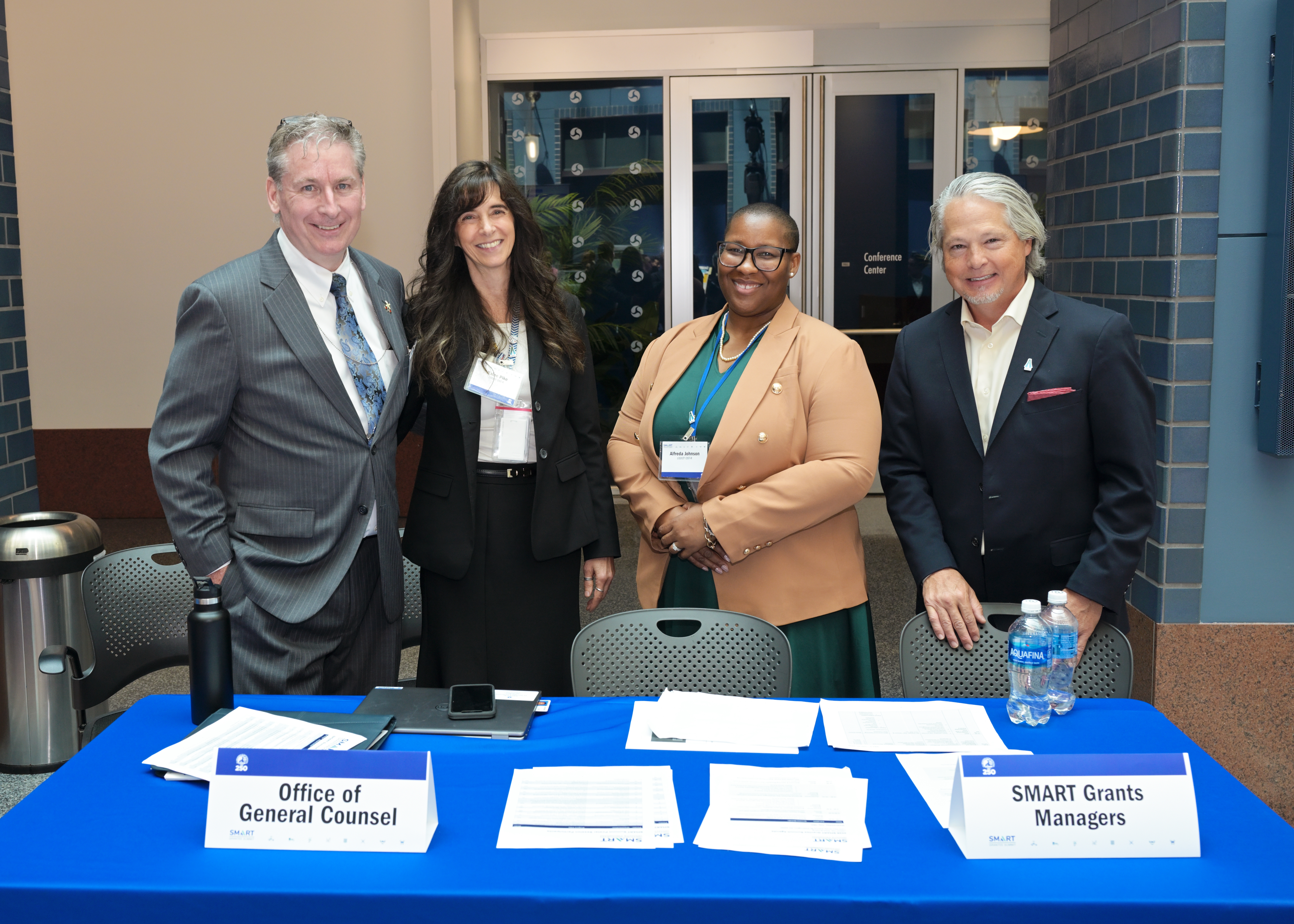

During the event, attendees participated in breakout sessions facilitated by Subject Matter Experts (SMEs) from FHWA, FTA, FRA, FAA, NHTSA, and Volpe. Throughout the lifecycle of SMART projects, these SMEs also serve as resources to support and monitor projects. Within these sessions, attendees discussed updates to their projects and highlighted the lessons learned and key challenges from the past year.
Lessons learned included:
- The role of community engagement in testing new technology.
- Clearly communicating AI’s role within projects.
- Public-private partnerships.
- Training and workforce development.
- Measuring progress and desired outcomes.
- Vendor identification and management
- Agile project management techniques.
- Data generation and quality assurance.
Challenges included:
- Coordinating effectively with IT.
- Data collection, storage, and management.
- Geographical challenges and limitations.
- Project expectations vs. outcomes.
- Identifying and assessing support vendors.
- Scaling up and down successful projects.
- Navigating security hurdles.
- Increasing community involvement.
DOT Leadership Panel
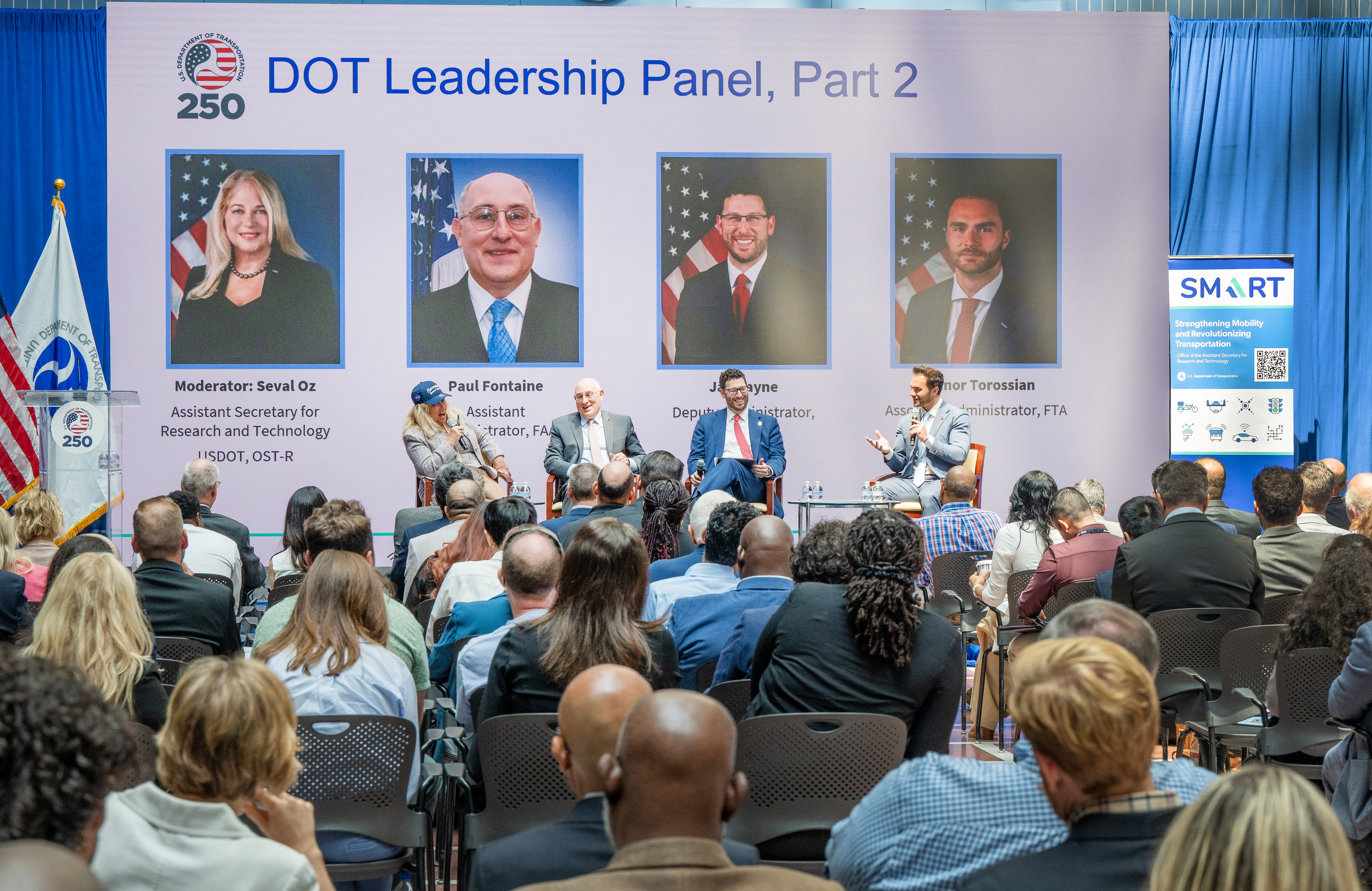
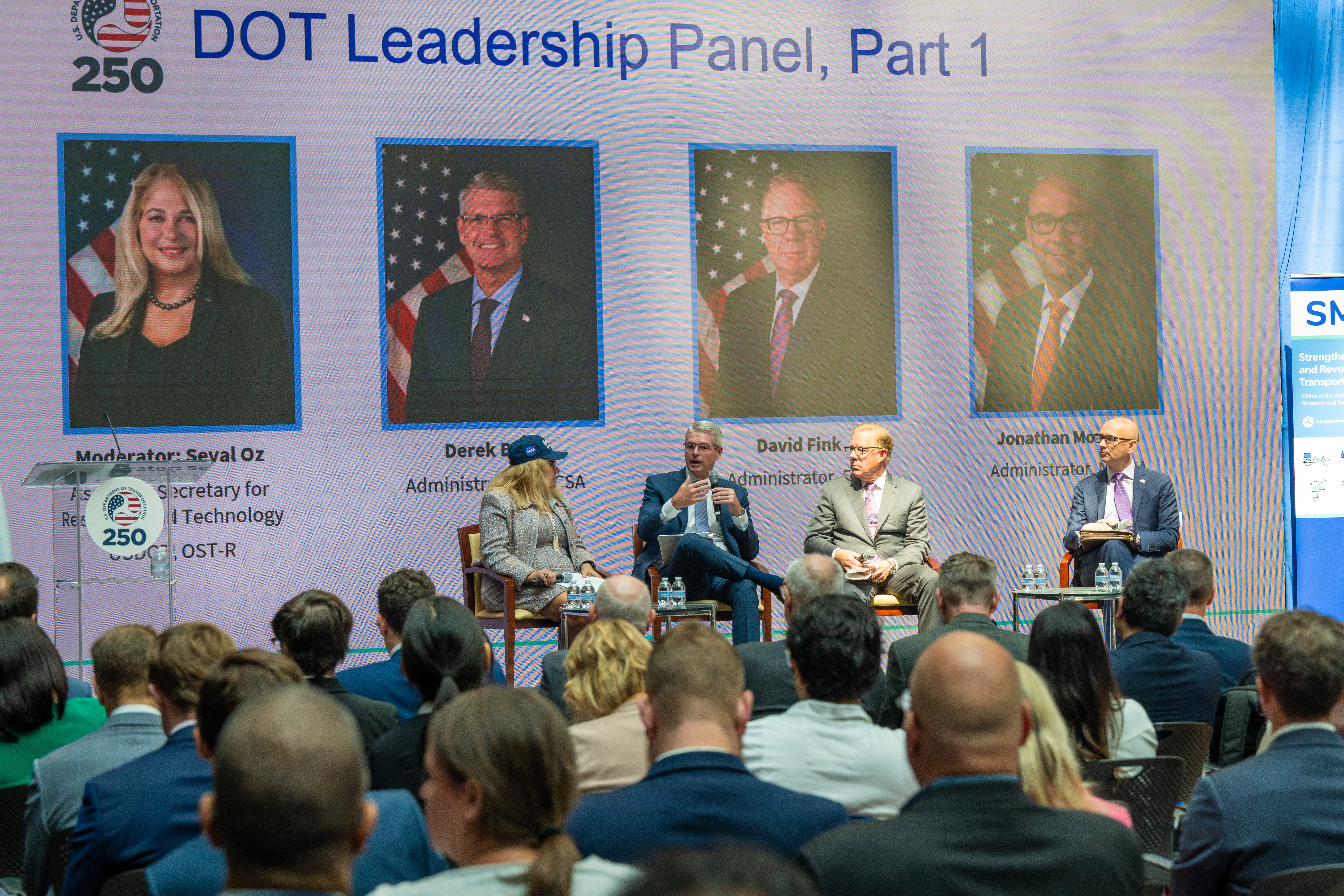
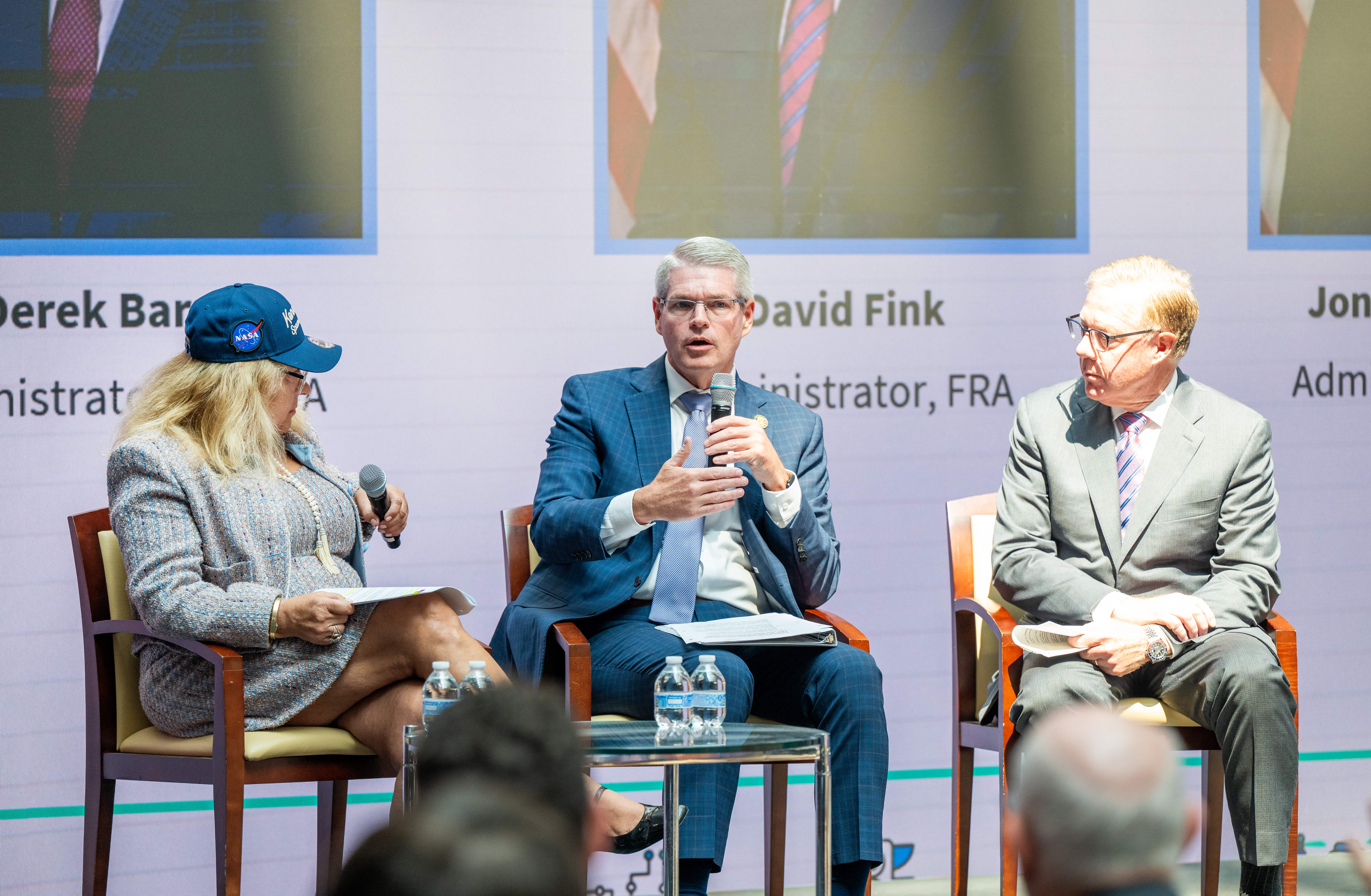
During the Summit’s Leadership Panels, attendees heard modal U.S. Department of Transportation leadership underscore the value of SMART projects and technology in improving safety and efficiency across the transportation system. Assistant Secretary for Research and Technology Seval Oz moderated two panels with FMCSA Administrator Derek Barrs, FRA Administrator David Fink, NHTSA Administrator Jonathan Morrison, FAA Assistant Administrator Paul Fountaine, FHWA Deputy Administrator Jay Payne, and FTA Associate Administrator Connor Torossian. The dynamic discussions spanned technologies, programs, and modes, helping awardees better understand the focus and priorities of the Department.
SMART Projects Poster Session
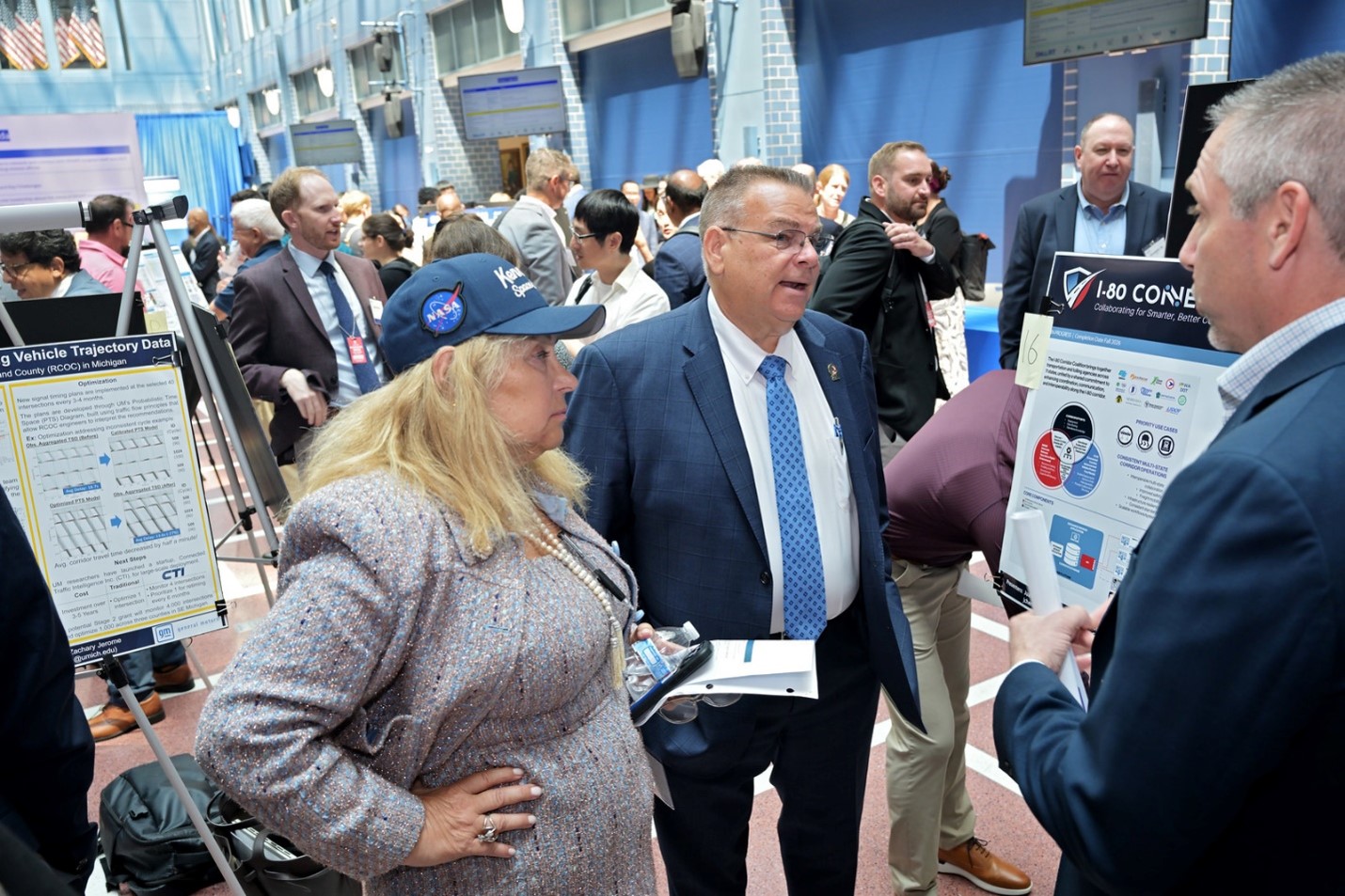
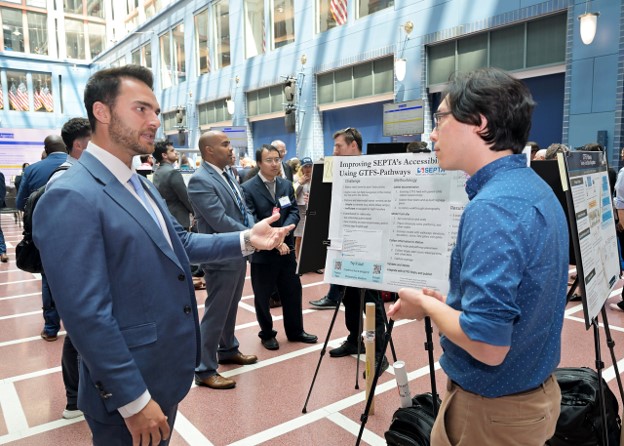
The SMART Projects Poster Session featured 26 interactive project posters, allowing attendees to participate in a peer exchange with industry stakeholders and U.S. Department of Transportation modal staff to accelerate technology transfer and promote proven solutions. This was the Summit’s first year hosting a poster session, and it was a tremendous success for all participants.
Grantee Reporting Session
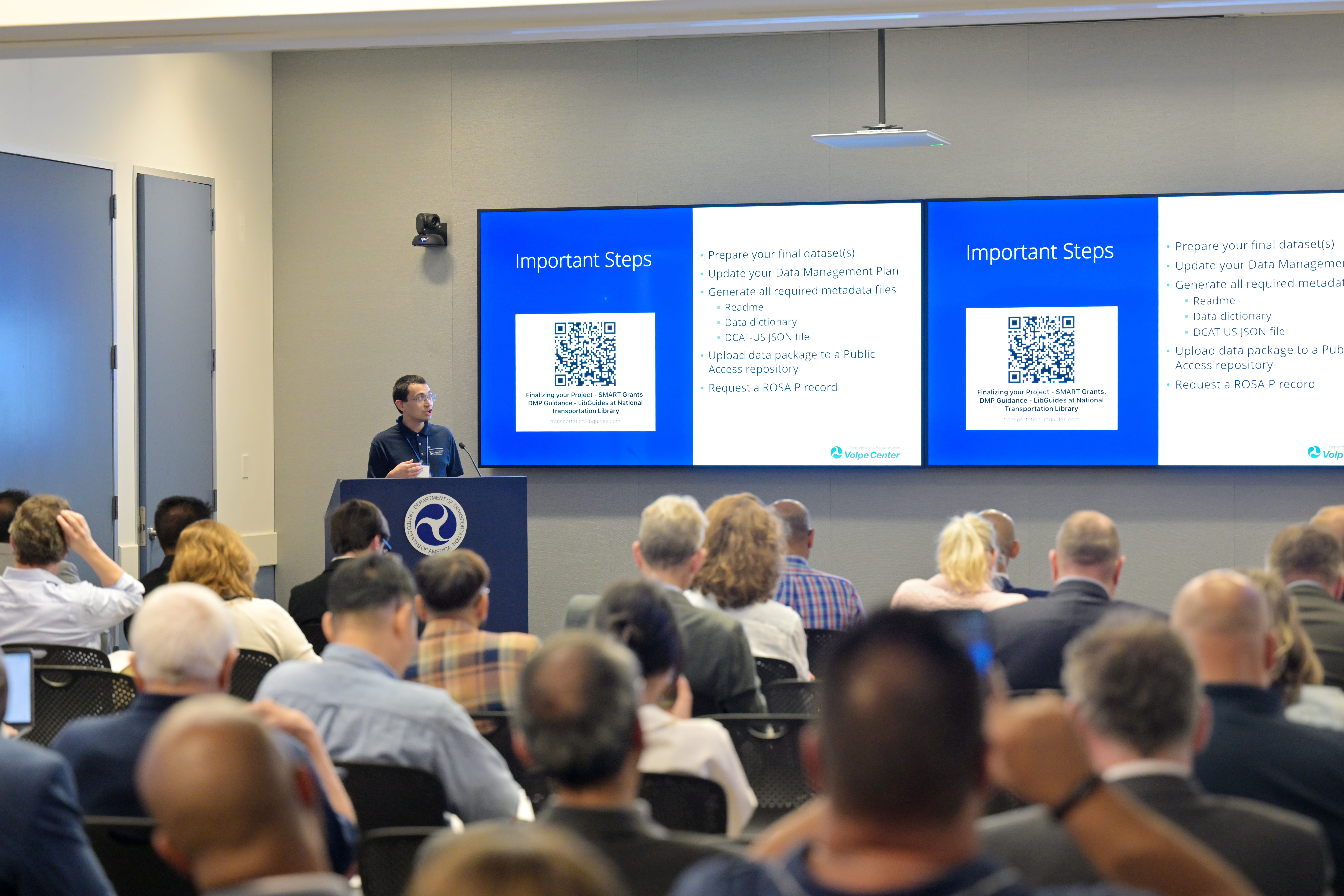
Following a lunch break, participants transitioned to a packed Grantee Reporting Session. This session focused on the reporting requirements for grantees. Speakers discussed uploading data, finalizing Data Management Plans, and finalizing ROSA-P entries. ROSA-P is the U.S. Department of Transportation's public repository of published materials to ensure public access to the data and reports created by SMART and other programs. Key speakers for this event included Raine Pike, Alfred Johnson, Grants Management Specialists and Ian Berg, Data Scientist.
Strategies for Scale Session and Closing Remarks
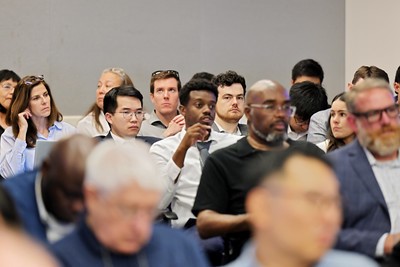
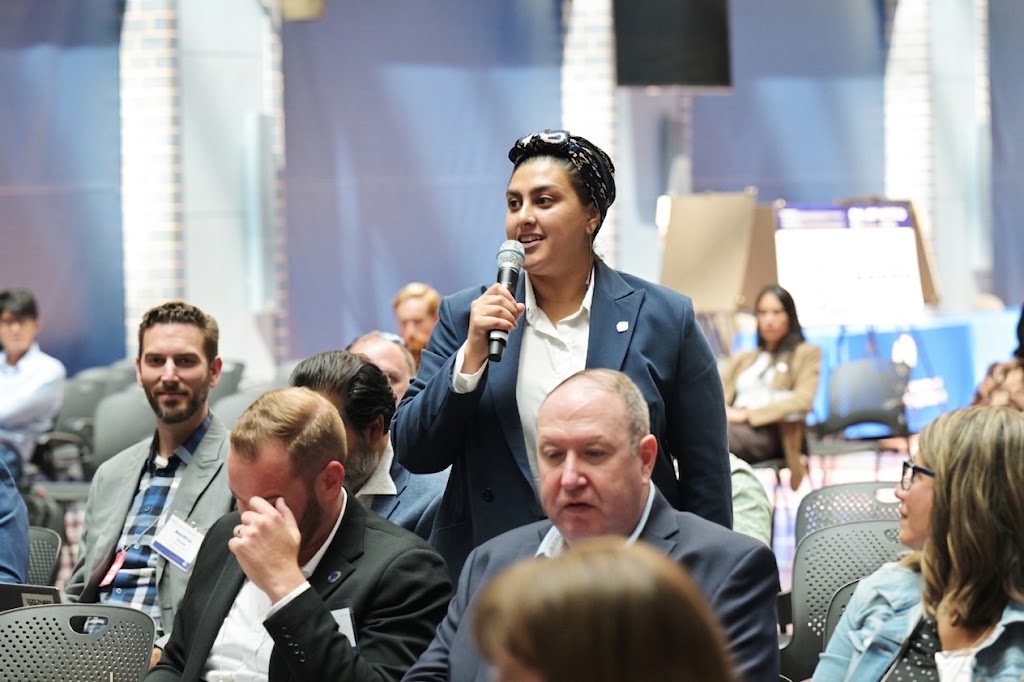
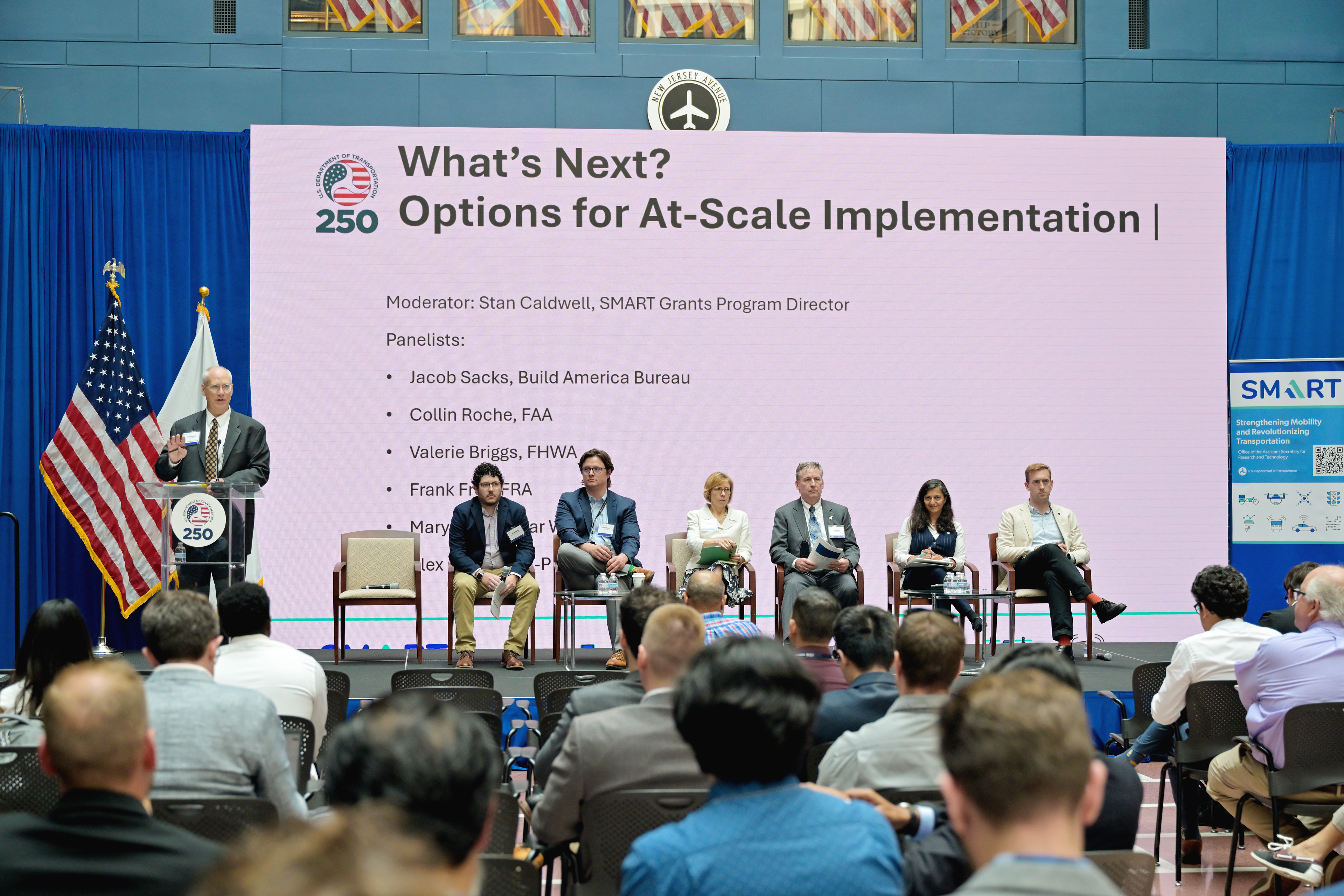
The day concluded with a Strategies for Scale Session closely followed by Closing Remarks. In the Strategies for Scale Session, panelists discussed the next steps for SMART projects as well as various strategies for scaling. Some key takeaways from the panel included how to implement effective payment and tax systems that promote growth rather than hinder it. Another topic that was discussed is the importance of building strong relationships with regional stakeholders to encourage both engagement and collaboration. Panelists for this event included Jacob Sacks, Project Development Lead from Build America Bureau, Collin Roche, Technical Aviation Safety Analyst from FAA, Valerie Briggs, Director from FHWA, Frank Frey General Engineer from FRA, Maryam Allahyar Wyrick, Associate Administrator from FTA, and Alex Clegg, Transportation Specialist from OST-P.
Following the session, Stan Caldwell, Director of the SMART Grants Program, provided closing remarks for the U.S. Department of Transportation SMART Summit 2026. Caldwell discussed the importance of SMART's new efforts to share lessons learned, project results, and data with innovators, researchers, and other agencies ready to replicate and scale successful technologies, and thanked attendees for taking the time to participate in the summit.
Outcomes and Next Steps
After the success of this Summit and positive feedback from participants, the SMART team is looking forward to planning the next Summit focused on Stage 2 SMART Awardees in the near future. Stay tuned!