


AGCC Structure and Roles
The AGCC model will facilitate multi-industry P3s to generate commercial and public benefits while protecting the transportation ROW owners’ control. For corridors selected as AGCCs, the ROW owner (i.e., State DOT or railroad) may procure a Corridor Manager – a private-sector partner that manages corridor responsibilities and delivers projects.
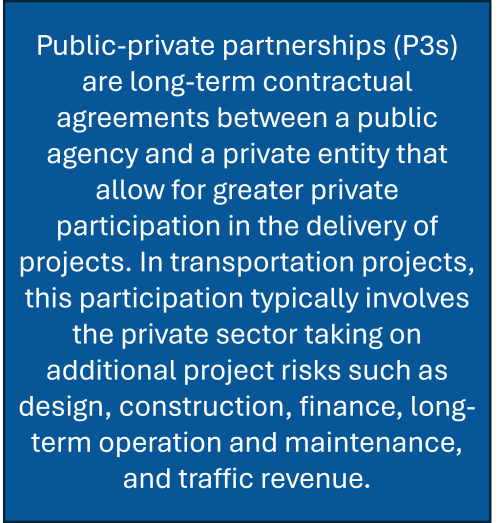
The Corridor Manager would:
- Deliver utilities under ROW owner-defined contractual requirements
- Share ROW revenue streams with ROW owner
- Be responsible for corridor:
- Safety and compliance
- Stakeholder engagement
- Design, permitting, approvals, financing, and construction
- Operations, maintenance, and lifecycle management
- Performance requirements
- Business development and financial management
The ROW owner would establish an agreement with the Corridor Manager to specifically define:
- The lease/easement agreement
- Authorities granted to the Corridor Manager
- Approval processes and requirements
- Performance requirements (e.g., ensure safety and do not impair use)
Under the AGCC model, the ROW owner retains final authority over the ROW and benefits from transferring risks, such as business development, design, construction, finance, and long-term operation and maintenance to the Corridor Manager through the P3 agreement. The Corridor Manager receives revenue from the utilities that lease the designated ROW (e.g., space available inside a bored tunnel), which are shared with the ROW owner according to the P3 agreement. Utilities benefit from avoiding the procurement, environmental review, and permitting processes needed to establish stand-alone infrastructure. ROW owners of designated AGCCs also have the option to act as Corridor Managers, retaining management responsibilities and receiving AGCC’s concierge services. Any ROW owner not designated as an AGCC may also pursue the P3 model. USDOT will provide technical assistance to the extent resources are available, but designated AGCCs will receive priority support.
An example P3 Term Sheet template is available as a resource. Use of this template is not required.
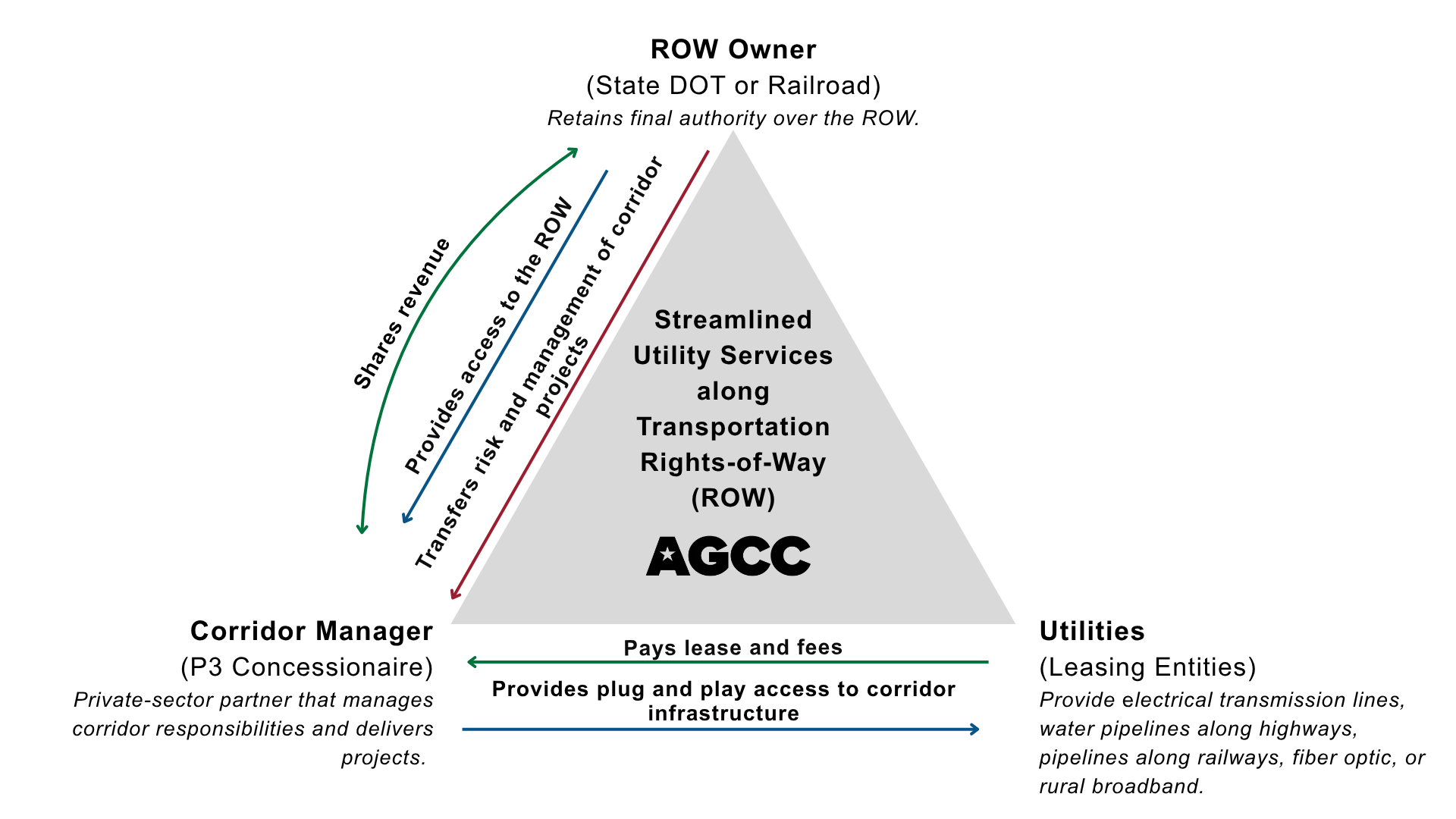
| Learn more about P3s on FHWA’s Center for Innovative Finance Support website and find examples of P3 projects on the Build America Bureau's Project Highlights page. |