


Secure Data Commons

The Secure Data Commons (SDC) is a cloud-based analytics platform created and operated by the U.S. Department of Transportation (USDOT) to break down data silos and accelerate innovation.
Traffic engineers, researchers, and data scientists are enabled to securely access transportation datasets - including those of moderate sensitivity (PII & CBI) - and associated metadata in a controlled, FedRAMP-authorized environment.
From statistical analysis to building and training neural networks, the SDC's modern, scalable ecosystem provides users on-demand access to powerful GPU-accelerated workstations and built-in tools to more rapidly and collaboratively turn sensitive data into meaningful insights for USDOT-approved projects.
Learn More About the SDC
Secure Environment Access sensitive transportation datasets in a controlled, FedRAMP-aligned cloud workspace with the proper security controls for your program's data. The SDC ensures that sensitive information remains protected while still being accessible to authorized users.
Open-Source Collaboration Bring together researchers from academia and federal agencies to share common data sources and analytical tools. The SDC lowers the logistical barriers that typically slow down cross-organizational research partnerships.
Analytical Tools and Workstations Work in pre-configured cloud environments loaded with industry-standard analytical tools — including Anaconda3, ArcGIS Pro, DBeaver, GitLab, and Amazon Bedrock for generative AI modeling. SDC provides the underlying infrastructure so your team can focus on analysis and collaboration, with users both in and outside of the DOT, without sensitive data ever leaving the secure boundary.
For more information on Secure Data Commons, please see SDC Capabilities.pdf.
For more information on SDC's security capabilities, please see SDC Security.pdf.
The USDOT Secure Data Commons (SDC) platform features datasets for the following projects - check back soon as new projects (datasets) are added:
Waze for Cities Program
The U.S. Department of Transportation's (USDOT) Safety Data Initiative (SDI) is a cross-cutting, collaborative effort within DOT, led by the Office of the Secretary of Transportation. The intent of SDI is to build on and enhance safety efforts related to data, analysis, and policy making. SDI is integrating Waze data with transportation data to develop rapid crash indicators.
Highway Safety Information System (HSIS)

The Federal Highway Administration (FHWA) developed the Highway Safety Information System (HSIS) to support safety research programs and provides input for program policy decisions. HSIS is a roadway-based system that provides quality data on a large number of crash, roadway, and traffic variables. The crash, roadway inventory, and traffic volume data are acquired annually from a select group of States.
FHWA provides this data to researchers upon request through the HSIS webpage. Educators who wish to use HSIS data for instructional purposes in a road safety course should contact HSIS staff directly at charles.fay@dot.gov. For more information https://highways.dot.gov/research/safety/hsis
Project Spotlights highlight how federal agencies and research teams have used the Secure Data Commons to advance transportation research goals.
Connected Vehicle Pilot (CVP) Deployment Program
Sponsor: Intelligent Transportation Systems Joint Program Office (ITS JPO)
FRA Agile Railroad Data Science Programs (ARDS)

Sponsor: Federal Railroad Administration
Added Highlights from the Waze Alerts User Community

- Adirondack Park road conditions s & daily trends during hiking days, informing options for new shuttle route planning.
- Regional crashes for 31 parks in the Inter-Mountain Region, both supplementing NPS data or acting as the major source of crash trends.
- Mount Rainier entrance congestion and how gateway communities and roadways areused to enter the park from visitor home (eg. Portland, Seattle,
Sponsor: Intelligent Transportation Systems Joint Program Office (ITS JPO)
COVID-19 Waze Traffic Alert Dashboard
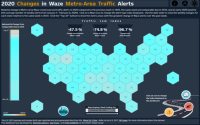
Sponsor: Volpe Center
Waze Pilot: Safety Applications

Sponsor: OST-P Safety Data Initiative
Open-Source Software for Intelligent Transportation Systems (OSS4ITS)
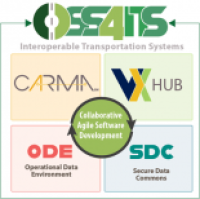
BTS Partnership: SDC Waze Data Analysis

Sponsor: Bureau of Transportation Statistics
To find out if SDC is the right fit for your project, please consider the questions and reference table below.
Questions | Yes | No |
|---|---|---|
| Does your project generate data that needs to be access-controlled? | ✅ SDC will store and analyze sensitive data with fine-grained access control. Access is authorized to users through a data use agreement with revocable access terms to protect the sensitivity of data. | Project-level data management may be secure enough. |
| Does your project require collaboration between DOT Analysts and Researchers in the transportation community using the same data and tools? | ✅ SDC promotes team collaboration by enabling data analysis tools, custom toolsets, open code sharing, and dataset curation to data analysts and external data providers. | Data sharing and analysis for the project team, using the same tools may be sufficient. |
| Does the project generate or need to manage sensitive data? | ✅ If the project manages only moderately sensitive data, then SDC is a good option. If data is not sensitive, the SDC is not required. Public data hubs may be a better option (like the ITS Data Hub). | The SDC may not a good option for managing extremely sensitive data. |
| Does your project need to combine data from a diverse set of transportation data sources? | ✅ SDC leverages cloud capabilities to share complex transportation datasets with the transportation research community to analyze problems or gain insights. | SDC will enables scalable data storage, data analysis and user access via cloud-based platforms. |
Getting Started With the SDC
The SDC Project Lifecycle

Each project in the USDOT Secure Data Commons (SDC) goes through a standard lifecycle of activities.

Prospective
SDC team works with Project Owners who have a clear objective and a set of data providers and/or data analysts to support your research project needs.

Planned
We work with you to understand the objective, timelines, data provider and data analyst needs. The SDC and project teams collaborate to define the high-level requirements for the project and assess the suitability of the platform.

Discovery
We collaborate with you to define the detailed requirements for your project including gathering dataset documentation to demoing data pipeline architecture.

Onboarding
SDC Team implements data ingestion and curation requirements. We provide access to workstations, training materials, and assistance for queries and data uploads to support cross-project collaboration.

Active
Project team utilizes the SDC platform to achieve research objectives, while we actively provide Support Desk service.

Export
We work with you to conclude active research work in the SDC platform and begin planning retirement. (No new data coming from data providers.)

Retire
SDC Team archives project data as per records retention schedule, removes team members, and works with Project Owner to conduct final closeout.
What's Next?
As a project owner interested in joining the SDC, use the steps below to get started:
Reach Out to SDC Team. Contact SDC Support to get an introductory overview of the services and platform features that SDC provides. Email sdc-support@dot.gov .
Let's Meet! During the SDC 101 Overview meeting, come prepared to provide an overview of your research program objectives, goals, and any security concerns. You will gain an understanding of SDC's capabilities, dataset availability, and customer support services.
Way Forward. SDC team will provide a Cost Estimation to support your program needs and notional timelines. Steps to fund SDC supporting services will follow the Working Capital Fund process. SDC services are flexible to exercise options to provide dedicated capacity.
The SDC support team works with approved project owners, data providers, and analysts to ensure your SDC environment runs smoothly.
The SDC support team has also created the following user guides to further support the day-to-day activities of project researcher/analysts and data providers.
- User Guide for Researchers including materials on open source collaboration using GitLab.
- User Guide for Data Providers
A series of training videos to get to know the SDC services and capabilities:
SDC 101 Overview
A general overview of the Secure Data Commons
SDC Personas Guide
Overview of the different personas involved in the SDC including the Project Owners, Data Stewards, Data Providers, and Data Analysts.
How to Access and Launch Your Workstations
Overview of how to access your workstations within the SDC.
Getting Started with DBeaver
Overview of how SDC Researchers can get started with using DBeaver.
How to Request Access to Datasets in SDC
How to request access to specific datasets through the SDC Web Portal.
How to Request Trusted User Status in SDC
How to submit to become a Trusted Researcher within the SDC to support automated exports.
How to Approve Data Exports out of SDC
Overview of how SDC Data Stewards can approve data exports out of the SDC.
How to Approve Trusted User Requests
Overview of how SDC Data Stewards can approve trusted user export requests.
SDC Vocabulary Video Part 1
SDC Vocabulary Video to inform researchers on what the SDC is and what workstations are.
SDC Vocabulary Video Part 2
SDC Vocabulary Video to inform researchers on what types of datasets that exist on the SDC.
SDC Researcher Demos
Recorded video of an interactive demo of research tools and Notification Service
For more videos and more information about the SDC, please reach out to the SDC Support Desk.