



The Advanced Air Mobility National Strategy

Enhancing safety, encouraging innovation and modernization,
strengthening the U.S. economy, and improving Transportation for all Americans.
AAM in America: The Next Era
The United States has led global aviation for more than a century, beginning with the Wright Brothers. Since then, innovations to aviation have included safety enhancements such as glass cockpits, Automatic Dependent Surveillance-Broadcast (ADS-B), Enhanced Ground Proximity Warning Systems (EGPWS), and predictive windshear detection. AAM has the potential to enhance community accessibility and connectivity while simultaneously facilitating cargo movement, trade, and commerce. America is ready for these new aviation changes, technologies, and opportunities.
What is AAM?
AAM is a rapidly-emerging new sector of the aerospace industry that aims to safely and efficiently integrate highly automated aircraft into American airspace. AAM is not a single technology but rather a collection of new and emerging technologies being applied to aviation, particularly in new aircraft types. AAM is designed to deliver agile, affordable, and accessible flights to all Americans and drive infrastructure development, employment, and innovation.
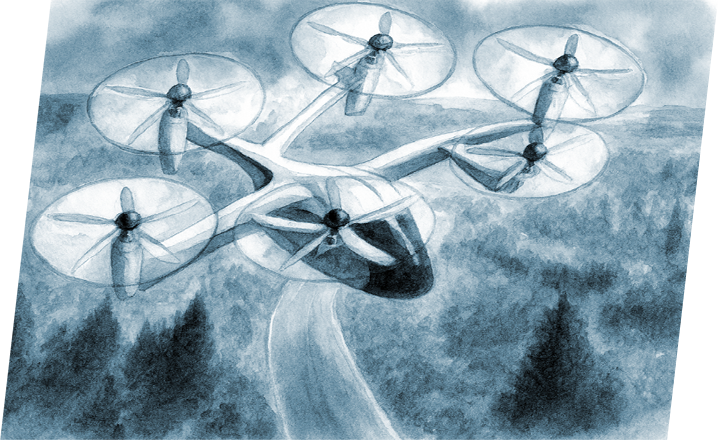
New Aircraft and Technology:
AAM aircraft will be cutting edge, built with the latest technology. They usually fly at lower heights, typically under 5,000 feet. They can transport people and packages more efficiently than ever before.
Modernized Ecosystem:
AAM isn’t just about the aircraft. It’s about building a modernized support system, including the workforce, infrastructure and clear rules needed to enable AAM across the United States.
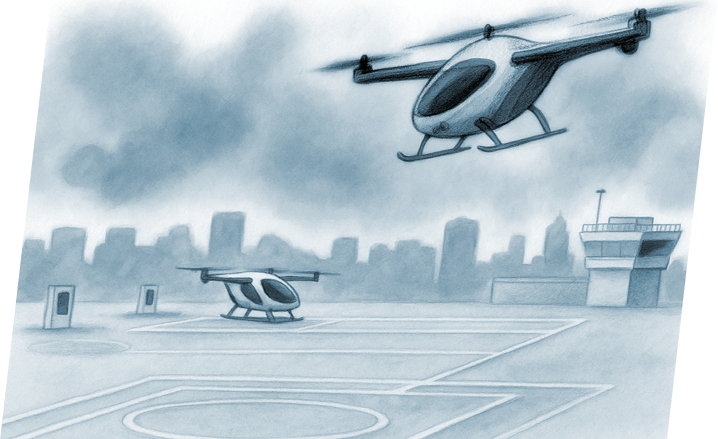
Expanded Benefits:
AAM offers many benefits for Americans. It enables time savings, quieter operations, emergency applications, and increased connectivity across communities in exciting ways. It will create highly skilled jobs and provide new air travel options in areas where large jets aren’t practical.

The Act
On October 17, 2022, the Advanced Air Mobility Coordination and Leadership Act (Act) was signed into law, tasking DOT with establishing an AAM Interagency Working Group to review and examine AAM issues in America.
The Goal
The Act called for a national strategy to expand transportation options, amplify economic activity and jobs, advance environmental sustainability and new technologies, and strengthen emergency preparedness and competitiveness—ultimately improving the quality of life for all Americans.
The Result
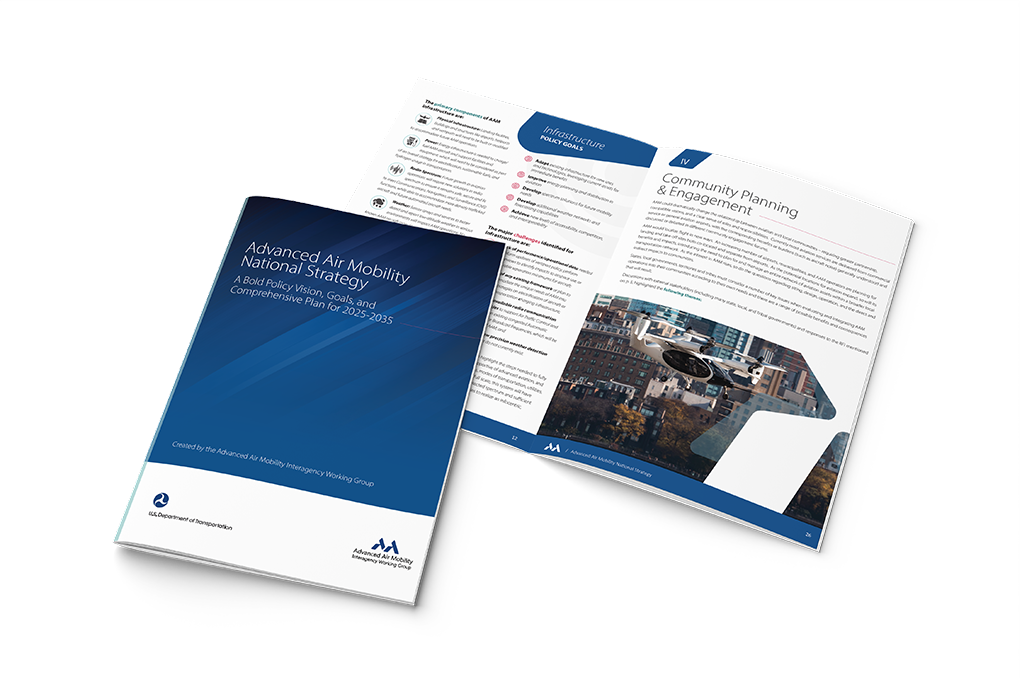
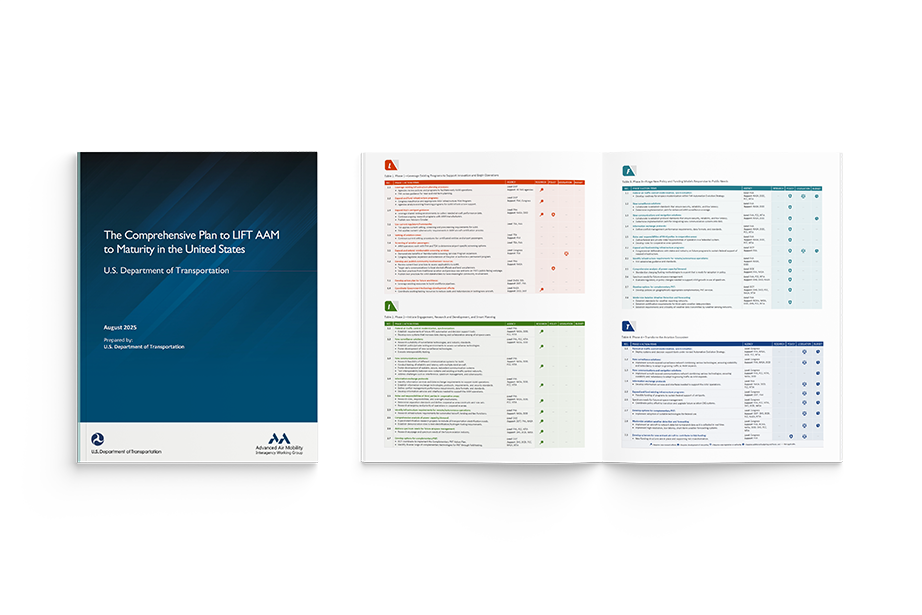
DOT developed two key reports: The AAM National Strategy, which outlines the recommended actions to advance AAM, and its accompanying Comprehensive Plan, which defines agency roles, sequences steps, and sets priorities for implementing them.
A Flight Path to Success: The Focus Areas of the AAM National Strategy
The AAM National Strategy and Comprehensive Plan are structured around seven focus areas—like the blades of a powerful rotor—working together to guide AAM development and make this transformative vision a reality for everyone.

The Focus Areas of the AAM National Strategy

Airspace Modernization
Safely accommodate air traffic growth through technology, data sharing, and collaboration.
Adaptive Security
Ensure the safety and security of everyone and everything in AAM—from passengers to flight information—through solutions for operators, supply chains, and data centers.
Ready Workforce
Create learning programs and jobs to equip people with the high-value skills needed for an emerging aviation industry, including curricula, policy, and opportunities for U.S. workers to prepare for the future.
Stronger U.S. Aviation Economy
Create new policies and international agreements to help the United States lead AAM development and generate global business opportunities, including efforts to ensure regulations and standards are ready to expand AAM's economic reach worldwide.

Advanced Infrastructure
Plan the strategic placement and use of utilities, buildings, radio spectrum, and technologies that support new aircraft, increased traffic, automation, and advanced weather detection.
Community Planning and Engagement
Support communities with resources for smart permitting, planning, and preparation for AAM.
Applied Automation
Develop and test smart, automated systems to make AAM safer and efficient.
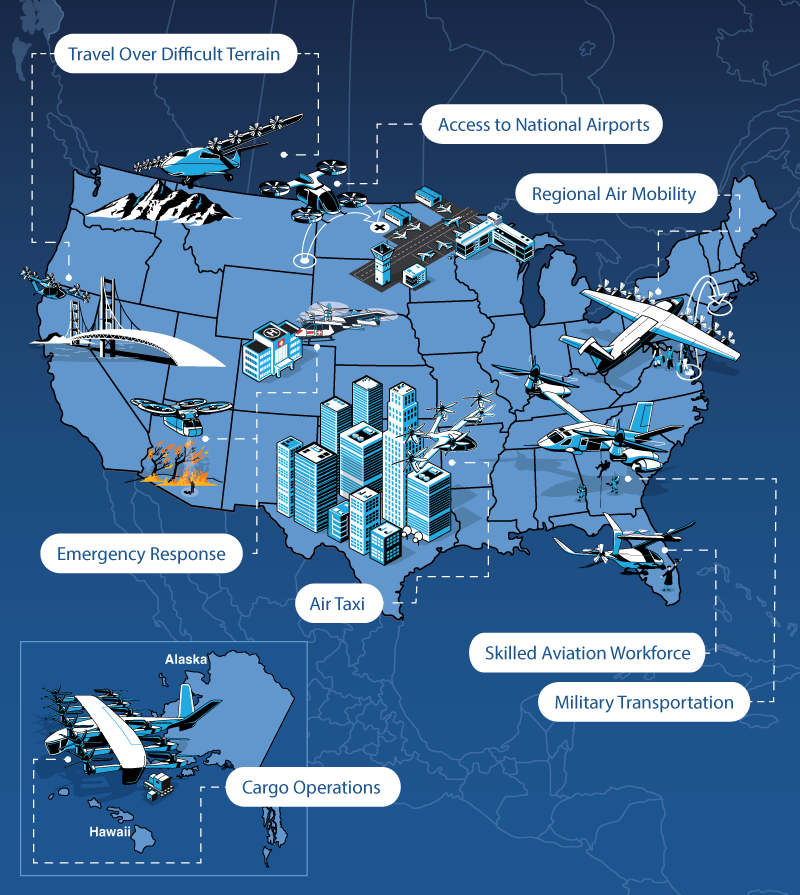
The Many Missions of AAM
AAM has the potential to reshape how we live, work, and connect. Its mission includes enhancing rural and urban transportation, strengthening cargo operations, and advancing both medical and military transportation. With the integration of automated capabilities, AAM should improve safety and efficiency and inspire the next generation of aviators.
Implementation Through LIFT
“LIFT” is the action plan outlined in the Comprehensive Plan, built on the National Strategy’s pillars. It translates the Strategy’s recommendations into purposeful, incremental steps supported by research, interagency collaboration, and policy development. These efforts are organized into four action phases that will guide AAM from initial operations to full deployment over the next decade. The ultimate goal is to deliver safe, secure, efficient, and connected transportation options for all Americans.
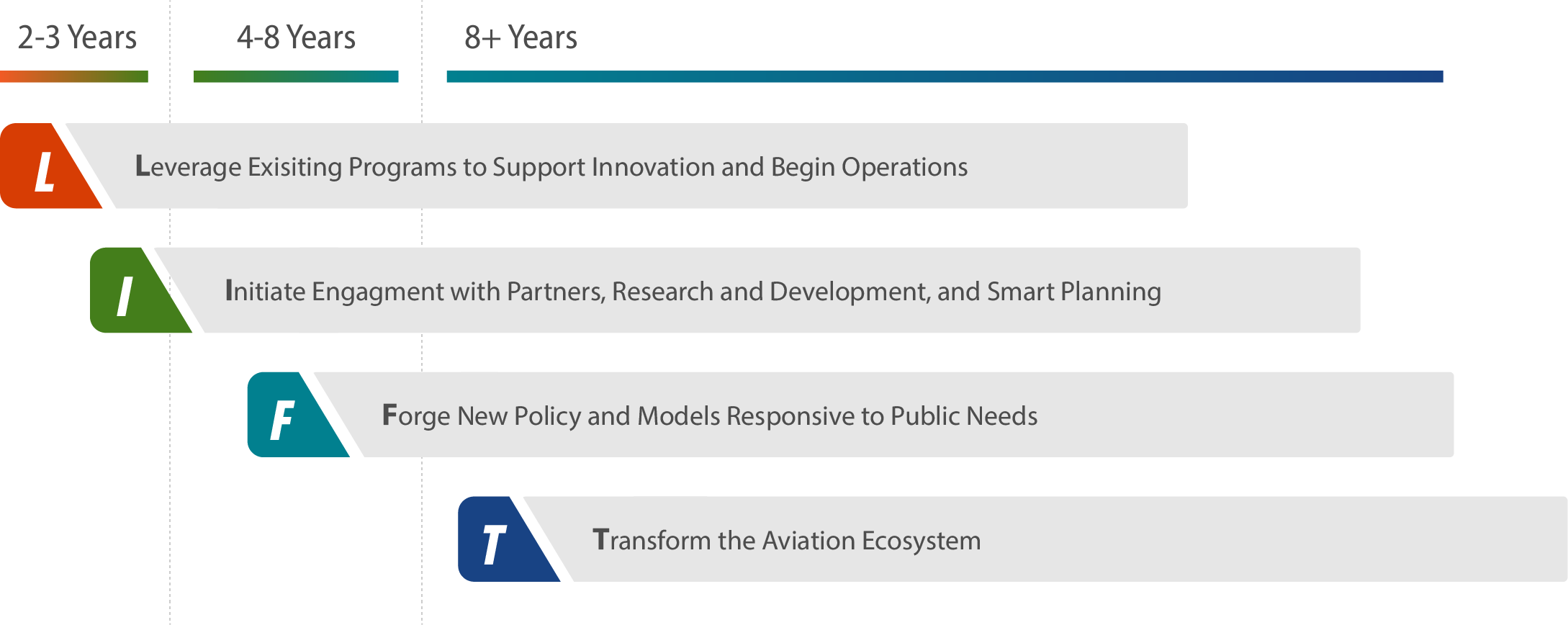
AAM will LIFT American aviation by:
- Keeping America as the world leader in aviation.
- Introducing innovative aircraft to move people and cargo.
- Developing quieter and more affordable flight options.
- Building and adapting smart, accessible infrastructure.
- Enabling regional air service and connecting urban, rural, and suburban communities across the country.
Ready for Take Off
The future of aviation is taking flight. In the years ahead, AAM may redefine how people fly and how communities connect, ushering in a new era of possibilities. Guided by key recommendations, the U.S. Government will advance initiatives that promote accessibility, affordability, and aviation autonomy. This next chapter in aviation capability is coming to the skies—and the AAM National Strategy and Comprehensive Plan offer a closer look at how it will unfold.
DOT is committed to ensuring that information is available in appropriate alternative formats to meet the requirements of persons who have a disability. If you require an alternative version of files provided on this page, please contact becki.hutchison@dot.gov